Why do I get the feeling that when a chinese person hears the word "small business" he or she is not applying the same mindset as a westerner?
Anyhow, enough of my philosophy lesson. Here is a "small" business from Beijing, China focusing on a variety of uses for the biochar they produce. Manufacturing as well as R&D is on their list of endeavours. They have had great success in using biochar as a purifier of heavy-metal polluted soils.
http://www.biowindbell.com/
PS. The blog is in a state of occasional updates. I need the blog to stay alive, but not to be filled with useless posts. Balance is the key word here.
Showing posts with label biochar. Show all posts
Showing posts with label biochar. Show all posts
Wednesday, October 26, 2016

Tuesday, January 27, 2015
Energy Farmers Australia
This awesome contraption chrystalizes my idea of biochar making. The mobile biochar kiln by Energy Farmers Australia

Sunday, January 25, 2015
Other Finns on biochar
I don't know this guy (yet) but he seems to have an interest in biochar just like me.
Ville Karttunen, pleased to meet you.
Monday, January 19, 2015
Sanga Moses, a life changer from Uganda
It is said that this guy sold his bed in order to develop a biochar making kiln. Here he is featured in national geographic :
http://news.nationalgeographic.com/news/2014/12/141215-sanga-moses-uganda-energy-wood-burning-fuel#b01g16f20b15
Thursday, January 15, 2015
So Science took an interest in biochar
http://www.nature.com/news/agriculture-state-of-the-art-soil-1.16699
Wednesday, September 10, 2014
Charboard and 55 uses of biochar in paper products
The Biochar Journal is now online. In this ad free, open source journal you will be able to read articles from the cutting edge in biochar research. Personally I find the article about charboard, an excellent example of concrete use of biochar in everyday life. The idea of charboard is to replace the traditional filler component of cardboard with biochar. This gives new and beneficial properties to packaging materials. At the end of the article is a list of 55 potential uses for charboard. Imagine wall paper that would absorb odors and that could be composted afterwards, mitigating CO2 in the process.
The journal is asking for my and your help to support upcoming issues of the journal.
This is amazing stuff. I can't wait to test this out for myself. How do I make charboard in my back yard?
The journal is asking for my and your help to support upcoming issues of the journal.
 |
| charboard with different levels of biochar. From: biochar-journal.org |
This is amazing stuff. I can't wait to test this out for myself. How do I make charboard in my back yard?
Tuesday, August 20, 2013
Justus von Liebig the first biochar rock star
Making way for the industrial revolution with his insight in chemical fertilizer and his work on the use of charcoal makes this guy my new hero. Read the article by Kelpie Wilson over at Ithaka Journal
Ithaka-Journal für Terroirwein, Biodiversität und Klimafarming » Blog Archiv » (English) Justus von Liebig and the Birth of Modern Biochar
Ithaka-Journal für Terroirwein, Biodiversität und Klimafarming » Blog Archiv » (English) Justus von Liebig and the Birth of Modern Biochar
Friday, May 10, 2013
New findings regarding biochar and N2O emissions from soils
Over at nature, members of the Cornell university have investigated the effects of biochar on reduced emissions of nitrous oxide, a potent greenhouse gas.
Wednesday, March 13, 2013
Oxfordbiochar
Over at bigbiocharexperiment.co.uk/ you can find really interesting stuff about biochar and even the instructions on how to start your own experiments. The pages are really easily read and I for one will investigate them further.
Monday, March 11, 2013
National Geographic on biochar
Put the word biochar into google and one of the top results is this article featured on the NG homepage. I think it was worth mentioning since it debates a lot of the issues and possibilities with biochar on a global scale as well as benefits for the individual.
Monday, March 4, 2013
Charcoal dust
I came across this video and I have to say, I don't know how to react. The idea is good, yes, but the execution is not optimal to say the least. On the other hand it shows what could be done differently. I mean the technique is 5000 years old...
Saturday, March 2, 2013
Introducing BalBic
I came across this website this morning. The Baltic Bioenergy and Industrial Charcoal company is:
"a renewable energy development project, which aims to develop the use of biocoal in the Baltic Sea region."If I'm not mistaken, this is one of a few Finnish companies that produce and study biocoal/biochar. An neven more interesting thing is that some of the authors of some of the material seem to be working here in my neighborhood. I plan to make contact and if I'm lucky maybe get a guided tour or some answers for my questions. Exciting times!
Monday, January 7, 2013
I can't help it: must share!
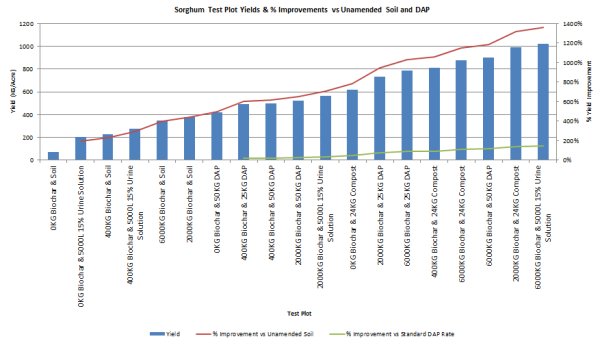
The Results Are In… Again! Read the astonishing news from the re:char team in western Kenya.
Monday, September 3, 2012
Biochar and disease
There is not much litterature on this issue as of yet but I found this intriguing article:
I confess, I haven't read it through but the pictures are nice :) I will probably come back to this issue later on since my master's thesis discusses plant disease.
Sunday, July 22, 2012
Stress peas update
 |
| Left: biochar, right: control |
The picture is telling us two stories. First, the biochar peas are now suffering from what I think is some kind of infection or insect feeding. Small marks on the lower parts of the stem are clearly visible. The yellowing leaves could also be a sign of too much water (we had a few days of heavy raining and the pots have no hole for excess water to drain out). This only proves the water binding capacity of biochar. This hypothesis is also supported by higher moisture in the biochar pot. (note to self: get a moisture meter)
 | |
| Biochar peas under attack! |
Friday, June 22, 2012
Biochar and stress
Observation:
Just to see the effects of biochar on plants in my own garden I planted peas in
two pots. The pots doubled as weights for the barbeque cover. Accidentally the
pots were covered with the cover and were thus deprived of light for a while. I
can only assume that the pots were covered for the same amount of time since it
happened by accident and I wasn’t there doing measurements. However, when I
uncovered the already germinated peas this was the result:
 |
Left:
biochar amended soil (1/5), Right: control. Plant: Pisum sp.
|
Hypothesis:
There could be a number of reasons for this phenomenon but I can narrow them
down to the two most likely:
1. Biochar has speeded the growth of
the pea making it thicker and thus more resistance to cover (the cover was
quite heavy ~thin raincoat) Also if you look closely at the pictures the one
grown in biochar is thicker and has a little greener leaves.
2. Biochar helps the pea recover more
easily from stress. Senescent leaves are absent from the pea grown in biochar.
Future prospects: Whatever
the exact reason I plan to make further experiments where I include more
samples and have some plants covered by pressing down the stalks and some where
I only deprive the plants of light for a period. Stay tuned for more.

Wednesday, June 13, 2012
World bio energy @ Elmia Jönköping, Sweden
I'm back from a wonderful 3 days of bio energy fair (and conference) in Sweden. My personal experience from this event is that biochar is not (yet) that interesting for the big companies (Metso and others) since they mainly focus on burning of biomass such as wood or pellets.
However, I got in touch with a guy involved in testing of a biochar facility in Costa Rica. The company was specialized in pyrolysis of hazardous materials and e.g. rubber tires. I am about to mail him soon and hopefully he can give some insight of what is going on with biochar in South America. There were also a few companies that are producing biochar through pyrolysis or that are using pyrolysis for gas production and one of them, Volter, even was from Finland. They have built a test village outside of Oulu in northern Finland that produces its heat and electricity from pyrolysis. The sales person didn't mention biochar but where there is pyrolysis there is biochar...
However, I got in touch with a guy involved in testing of a biochar facility in Costa Rica. The company was specialized in pyrolysis of hazardous materials and e.g. rubber tires. I am about to mail him soon and hopefully he can give some insight of what is going on with biochar in South America. There were also a few companies that are producing biochar through pyrolysis or that are using pyrolysis for gas production and one of them, Volter, even was from Finland. They have built a test village outside of Oulu in northern Finland that produces its heat and electricity from pyrolysis. The sales person didn't mention biochar but where there is pyrolysis there is biochar...
Monday, April 9, 2012
The birth of the Primusstove
 |
| The "Primusstove" |
The idea is based on the Anila stove which is of TLUD (Top Lit Up Draft) design. They took an old propane (?) tank and cut out the bottom and made it the outer shell. The center tube is made of an old fire extinguisher. I think this design and especially the choise of materials has great potential to spread considering all the junk (sorry, underestimated resources) lying around in pretty much every back yard of the Finnish country side.
Sunday, April 8, 2012
Simple math
I think the following statement from the bio energy list explains why making biochar is so important:
" A common Miombo forest in Africa will give about 3 ton wood per ha a year. 3 ton of dry wood will give 800 kg of charcoal. A household of 5 consume 2-3 kg charcoal a day or about 800 kg a year. To produce 3 kg of charcoal you need 10-12 kg of dry fire wood in a common kiln. That will give one day cooking on a charcoal stove, and almost no biochar. 10-12kg dry chopped wood will give 3 days of cooking on a TLUD-ND or another FES and 2.5 kg of biochar" -Paal Wendelobo
The main message is: Stop making coal for burning and instead use dry wood for cooking while making biochar simultaneously. Less polution and more cooking value.
Subscribe to:
Posts (Atom)